Bitcoin Faucets in 2026: What's Real and What's Better
Cash App revived the Bitcoin faucet with $1M in free BTC. Here's what the original was, what changed, and how you earn Bitcoin just by shopping.

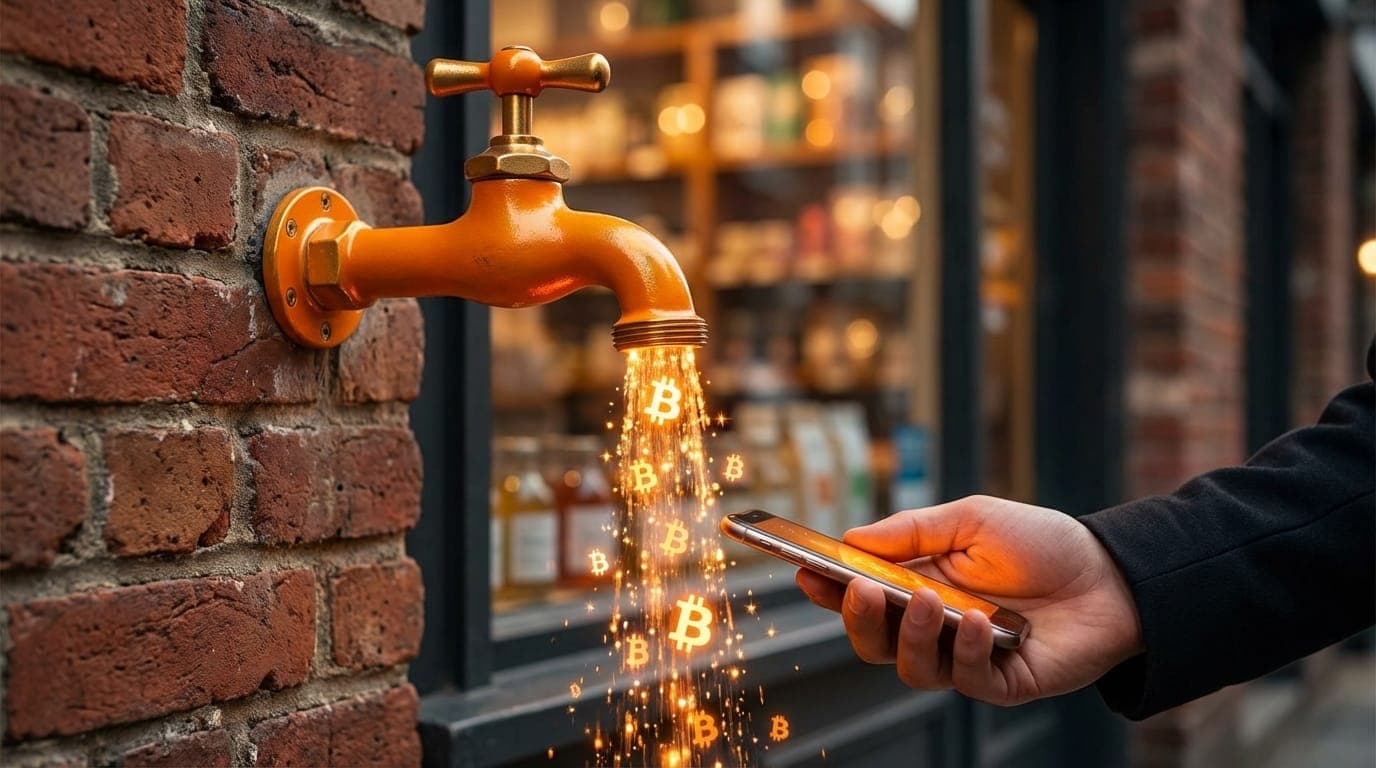
In June 2010, a Bitcoin developer named Gavin Andresen built a website with a simple premise: solve a CAPTCHA, receive 5 Bitcoin. No account. No purchase. No strings. He called it the Bitcoin Faucet, and over the next two years, it gave away roughly 19,700 BTC to anyone who showed up.
At the time, that Bitcoin was worth less than a penny per coin. The entire giveaway cost Andresen a few thousand dollars, maybe less. Today, at the time of this writing, those 19,700 BTC are worth over $1.3 billion.
Sixteen years later, Block (the company behind Cash App and Square) just announced they're bringing the faucet back. They've put up $1 million in Bitcoin and called it Bitcoin Day. The internet has opinions. Some people think it's great. Others say it's not a "real" faucet because you have to do things to earn it.
Both sides are missing the bigger picture. The faucet didn't just come back. It evolved. And the most interesting version of it isn't coming from a tech company at all.
What's in This Article
- The Original Bitcoin Faucet (2010)
- Cash App's Bitcoin Day (2026)
- The Backlash (And Why It Misses the Point)
- The Faucet Nobody's Talking About
- Front-Loaded vs Back-Loaded Value
- How to Start Earning Bitcoin by Shopping
- Frequently Asked Questions
The Original Bitcoin Faucet (2010)
Andresen launched the faucet because he wanted more people to try Bitcoin. In 2010, almost nobody had heard of it. The network had fewer than 10,000 users. There were no exchanges, no wallets with nice interfaces, no way for a normal person to get their hands on BTC. So he built the simplest possible thing: a website that handed it out for free.
The faucet started at 5 BTC per visitor. As Bitcoin's price crept upward, Andresen reduced the payout. By the time the faucet shut down in 2012, it was dispensing fractions of a coin.
Here's what that faucet accomplished: it put Bitcoin in the hands of software engineers, cryptographers, and early internet tinkerers. The kind of people who were already reading about peer-to-peer protocols and public key cryptography. It worked. Many of the people who shaped Bitcoin's early development first encountered it through Andresen's faucet.
Here's what it didn't accomplish: mainstream adoption. The faucet existed in a world where Bitcoin had no connection to everyday commerce. Most recipients either forgot about their coins, lost their wallet files, or spent them when BTC was still worth a few dollars. The often-cited story of someone paying 10,000 BTC for two pizzas happened the same month the faucet launched.
The faucet did exactly what it was designed to do. It wasn't designed to reach regular people. It reached the people who would build the infrastructure that regular people would eventually use.
Cash App's Bitcoin Day (2026)
Block launched Bitcoin Day on April 6, 2026. The campaign runs through April 10 or until a $1 million Bitcoin pool is exhausted, whichever comes first. Jack Dorsey, Block's CEO, called it a revival of the Bitcoin faucet.
It works in three tiers:
| Tier | What You Do | What You Get |
|---|---|---|
| 1 | Buy $10 or more in Bitcoin on Cash App | $5 in free Bitcoin |
| 2 | Pay a Square merchant with Bitcoin | $25 in free Bitcoin |
| 3 | Withdraw Bitcoin to a Bitkey hardware wallet | $50 in free Bitcoin |
Complete all three and you earn up to $80 in Bitcoin.
It's a clever structure. Each tier introduces a different part of Block's Bitcoin ecosystem: Cash App for buying, Square for spending, and Bitkey for self-custody. The campaign reads less like a freebie and more like a guided tour of what Block has built.
Eligibility requires a verified Cash App account, U.S. residency, and you need to be 18 or older. New York residents are excluded from Tiers 2 and 3 due to state regulations.
The Backlash (And Why It Misses the Point)
Within hours of the announcement, the criticism started. The main complaint: you have to spend money to earn the rewards. Tier 1 requires a $10 Bitcoin purchase. Tier 2 requires spending Bitcoin at a merchant. Only Tier 3 is triggered by moving Bitcoin you already own.
The argument goes something like this: the original faucet gave Bitcoin away for nothing. You just solved a CAPTCHA. This version asks you to buy Bitcoin first. Therefore, it's not a real faucet. It's marketing.
That take is technically correct and completely misses the point.
In 2010, Bitcoin was worth a fraction of a penny. Giving away 5 BTC cost Andresen less than a cent per visitor. The total giveaway, at the time of distribution, cost him somewhere between a few hundred and a few thousand dollars. There was no risk, no business model, and no expectation that any of it would be worth anything.
In 2026, Bitcoin trades near $67,000. Giving away $80 worth to a single user has a real cost. Expecting any company to replicate the 2010 faucet at today's prices would mean handing out roughly $335,000 per user (that's what 5 BTC costs now). The math doesn't work. It was never going to work.
What Block is doing is the realistic version: put real value on the table ($1 million) and use it to bring new people into Bitcoin. The mechanism is different because the world is different. Complaining that it's not the same as 2010 is like complaining that email isn't the same as sending a telegraph.
The Faucet Nobody Is Talking About
Here's what makes the faucet conversation incomplete: the most interesting evolution of the Bitcoin faucet isn't happening at Cash App. It's happening at small businesses.
There are merchants right now, independent businesses selling everything from skincare to grass-fed beef to coffee, that run Bitcoin rewards programs for their customers. When you buy something from these businesses, you earn Bitcoin. Not points. Not cashback in a proprietary app. Actual Bitcoin, sent to you as part of the purchase.
No Bitcoin purchase required. No special wallet setup to start. No five-day promotional window. You just shop.
Some of these businesses have been doing this for over a year. Individual merchants on the Oshi platform have distributed Bitcoin rewards worth, at the time of this writing, 20 to 30 times the dollar value that Andresen's entire faucet cost when he was running it. Not across the whole platform. Individual businesses.
And they're giving it to a completely different audience: not cryptographers or finance app users, but regular people buying groceries, skincare, supplements, and clothing online.
Front-Loaded vs Back-Loaded Value
This is the part that gets lost in the nostalgia around the original faucet.
Andresen's faucet was back-loaded. It cost almost nothing at the time. The value only materialized years later, in hindsight, after Bitcoin appreciated by millions of percent. Nobody planned for that. Nobody could have. Most recipients lost their coins before the price moved.
The modern version, businesses giving Bitcoin to customers, is front-loaded. The value is real right now. A customer earning a few thousand sats on a purchase is receiving something worth real dollars today. Not a lottery ticket. Not a speculative bet. Tangible value, delivered immediately.
Will that Bitcoin 10,000x from here? Almost certainly not. But that's not the point.
The point is that the value proposition has flipped. Instead of "here's something worthless that might be worth a lot someday," it's "here's something worth real money today, and it also happens to be an asset with a history of long-term appreciation."
That's a fundamentally better pitch for mainstream adoption. The original faucet asked you to believe in something with no track record. Merchant rewards give you something with a 17-year track record, on top of a purchase you were already making.
How to Start Earning Bitcoin by Shopping
If you want to earn Bitcoin the way these businesses offer it, here's what that looks like:
- Browse businesses on Bitcoin Rewards. Each listing shows what the business sells, their reward rate, and any active promotions.
- Shop like you normally would. Add items to your cart, check out with your regular payment method. There's nothing different about the purchase itself.
- Earn Bitcoin automatically. After your purchase, Bitcoin is allocated to your rewards balance based on the merchant's reward rate and any bonuses or tier multipliers.
There's no extension to install, no gift card to buy, and no affiliate commission being split behind the scenes. The merchant funds the rewards directly as part of their loyalty program.
For a deeper look at every method available for earning Bitcoin, including credit cards, faucets, gaming, and shopping rewards compared side by side, see our full guide: How to Earn Free Bitcoin in 2026.
And if you want to understand why small businesses specifically are choosing Bitcoin rewards over traditional points, this piece explains the difference.